Wednesday, January 17, 2018

Pressure

Pressure is the weight of particles above you and increases with depth in water. Right now there is one atmosphere of pressure squeezing on all of us, but we are used to it, so we don't notice the difference. We may notice our ears popping when driving over Shenandoah or flying in an airplane when pressure decreases.

Water is 800 times more dense than air, so underwater, pressure increases dramatically. Pressure increases one atmosphere with every ten feet of depth, so all you need to do is dive down the deep end of the pool and you will feel an increase in pressure to two atmospheres (one for the water, and one for the air)

Scientists think it is funny to take styrofoam deep into the ocean because the pressure underwater will squeeze the air out of the styrofoam and "shrink it." Really it is just compressed and more dense. Here is a photo of what happens to styrofoam wig-heads and cups when taken down a few thousand feet, a change of several atmospheres of pressure. Ms J has some styrofoam cups (donated by a former student) that went 12,000 feet down on a submarine that are very similar. They used to be 12oz cups and now they are only about 4 inches high.

We did a quick demo lab with plastic cups and water to demonstrate how pressure increases with depth.

Monday, January 15, 2018

Tsunamis

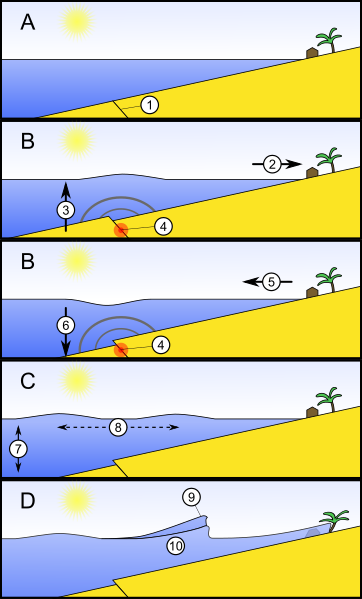
Today we discussed tsunamis, which fascinate most students. Tsunamis are caused by underwater earthquakes and they displace water. Displacement of water causes a large wave or energy to travel through the water, but it cannot be seen at the surface until the wave approaches shallow water. (Confused? Check out the diagram to the left) Because the wave is not felt in deep water, going out to sea is one option for escaping a tsunami, getting onto land with higher elevation is another option. There are places in Japan and Hawaii where fishermen went out to sea in the morning and when they returned, their villages had been washed away.

We discussed tsunamis and how countries around the globe are teaching native peoples to recognize the signs of a tsunami and setting buoys to measure if a tsunami is coming. Students decided that they were glad they didn't live somewhere where the threat of a tsunami is imminent... well except if the Canary Islands fall into the sea.

Most people are aware of the large tsunami that hit Japan last spring and the damage it caused to their coasts and towns. We discussed the damages and how powerful a tsunami can be. An interesting assortment of before and after tsunami pictures from Japan can be found here.

Thursday, January 11, 2018

Expanding Horizons

Each week you will be asked to visit a few online sources. You may be asked to read an article, watch a video, play a game, take a quiz, listen to a podcast or all of the above. Sometimes you will be given specific questions to answer. At other times you will be asked to write a summary convincing others that they should check out what you found. These assignments will take time so do not wait until the last minute. At all websites, you will be asked to correctly write a citation.

Assignments will be given on Thursday and are due by the end of the school day on the following Thursday (for the first one you get 2 weeks because ROAR has not started). If you are absent, the assignment is due the day you return. 

This week is the first week! Start by taking a personality test at 16 Personalities!

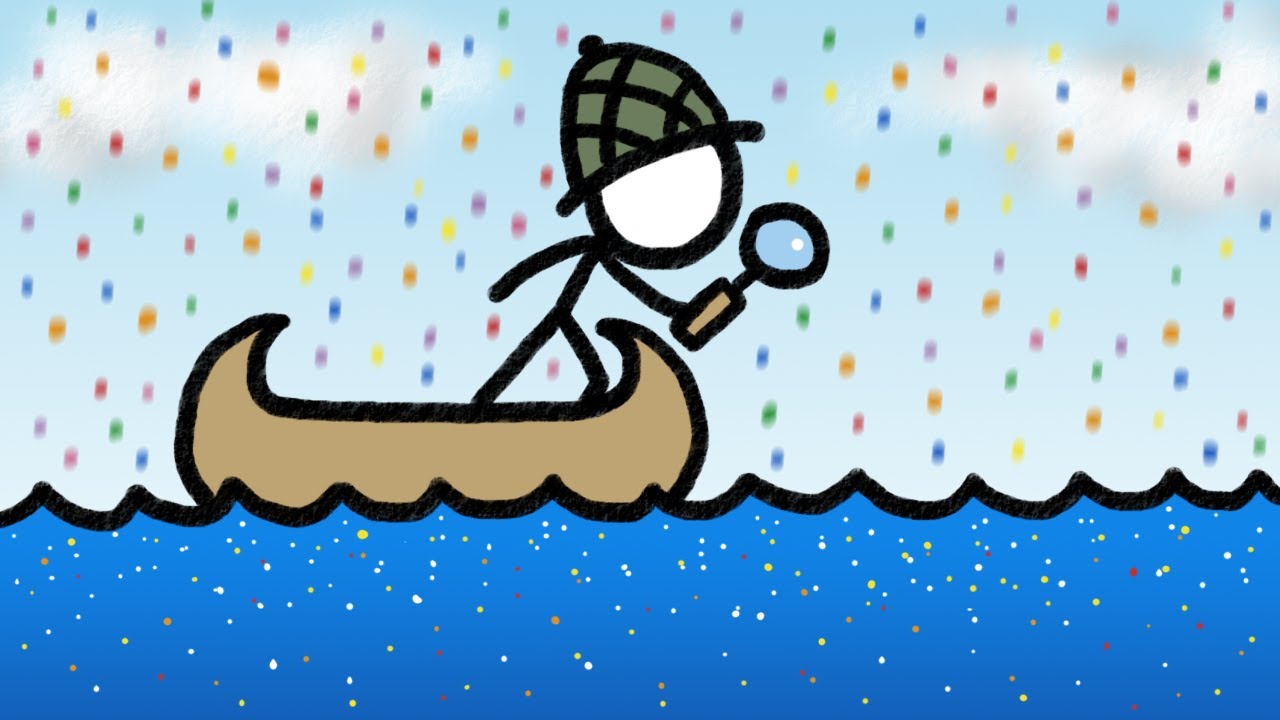
Video 1: Ocean Confetti https://youtu.be/qVoFeELi_vQ
You may need to watch this video more than once and pause it.

Wednesday, January 10, 2018

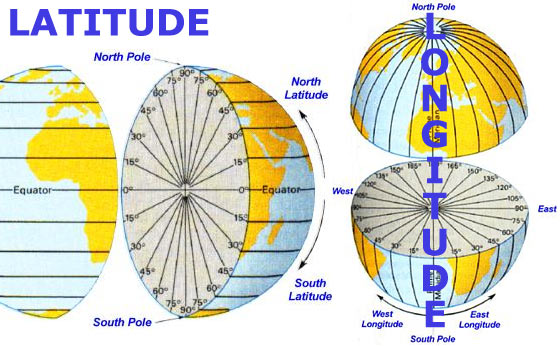
Latitude & Longitude

So far this week we have been discussing latitude and longitude. Students were given information about the uses of latitude and location and were maybe surprised that many of their phones were equipped with GPS tools. Students practiced on their own, have looked up locations in the US, and participated in an "Around the World" challenge where they needed to follow directions and locate important places.

Wednesday, January 3, 2018

Welcome!

Greetings students, parents, and guardians. Welcome back to a new school year with Ms J! Welcome to Marine Ecology! This blog has been set up to connect students, parents, and guardians with the marine ecology class.

In class, each student will receive a course syllabus and safety rules. They need to be read and signed by both the student and parent guardian. The course syllabus outlines what the course will be like, what topics will be covered, and course expectations. It also contains contact information. There will be a quiz on this syllabus and classroom procedures on Friday. The Safety Test (with a bit of latitude and longitude) will be later next week.

The safety rules are rules designed to keep the classroom safe and orderly to maximize learning and prevent accidents and injuries. These rules need to be studied because there will be a safety test on Monday and infractions of these rules can lead to disciplinary action as well as low assignment grades. A breakage sheet is a contract holding students accountable for the items that are broken if the student is acting a manner that is unsafe for themselves or those around them.


Please have these papers signed and returned as soon as possible. Students not returning signed safety rules and breakage sheets will not be able to participate in labs and activities until the contracts are signed and returned. 

Tuesday, November 1, 2016

Seafood Harvesting - Shrimp

We started discussing marine harvesting and fishing today by talking about who harvests the most seafood (China), who eats the most seafood (China), and which people eat the most seafood pounds per person (the Maldives). Americans are about sixth on the list as far as consumption, but we are the number one consumer and importer of shrimp. Importing shrimp is damaging to the environment for two reasons.

1. Shrimp that are farmed in other countries are not as regulated as here in the states, so shrimp farm pollution is not as regulated and it damages coral reefs. Also many mangroves are cleared to build these farms.

2. US boats are required to have turtle excluder devices (TED) on trawl nets so that turtles do not get caught in shrimp nets and drown. Other countries do not regulate this and as a result catch and drown sea turtles.

To make a environmentally responsible seafood choices, choose shrimp that are farmed or caught in the US. For more sustainable seafood choices, check out Seafood Watch.

Monday, October 31, 2016

Seafood Harvesting

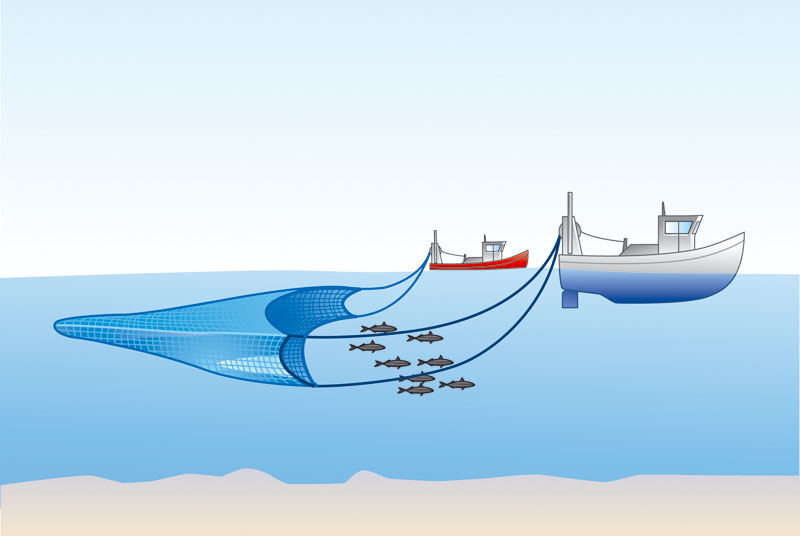
Netting is the most popular method of commercial fishing because a lot of fish can be caught in short amount of time without a lot of effort.

One the major problems with most commercial fisheries is the amount of bycatch. Bycatch is anything caught in the net that you do not want. This could include edible fish that your company is just not equipped to process.

Most organisms brought up in nets as bycatch do not survive because they are crushed or drowned. Sea turtles and dolphins sometimes get swept into nets and drown because they cannot make it to the surface to breathe.

Most scientists and fisherman agree that the oceans have been and are being overharvested. People may not like regulations, but without regulations, many fish species that we used to commonly consume would be extinct.

There are many ways to harvest fish. If you want more information, check out the links at Monterrey Bay Aquarium's Seafood Watch Organization.

Computer Lab Etiquette

You are in the computer lab to do work for this class. If you are not doing work, then we will have problems.

Do not pack up early. Work until the bell or until MsJ says.

SAVE OFTEN. And if you save to a key, also save it to your number. If you lose it, you will have to do it again.

If MsJ asks for your attention, stop what you are doing and listen to what she has to say.

You may watch videos about your organism through reliable websites.

You may listen to music through the computer if you have your own headphones. Rule1 MsJ cannot hear it. You get one warning. Rule2 Turn it on and listen – no million clicks and constant changing. Take both ear phones out when MsJ is talking.