Tuesday, November 30, 2010

Sea Turtle Hatchlings

Baby sea turtles, hatchlings, have a very tough life. Mom digs a nest, deposits her eggs (about 100), and then leaves. She may lay eggs four to six times a season. The eggs are about the size of ping pong balls and a little more flexible (they have a ways to fall).

Later, the hatchlings have to fight their way out of the nest and through sand to the surface... and then make their way to the ocean. One of the biggest threats to hatchlings is photopollution. For more information about how lighting affects baby turtles, click here.


For other threats to Sea Turtles as hatchlings or as adults, check here or here


Monday, November 29, 2010

Beginning Reptiles

In class we have been working on final projects and today we began discussing reptiles!

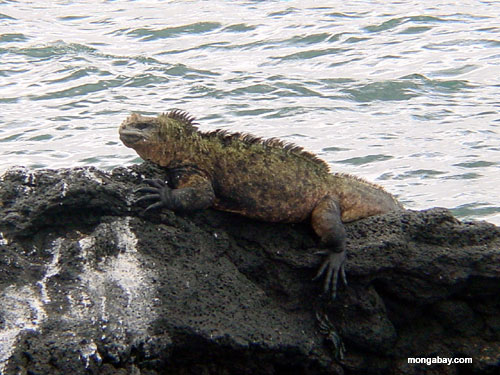
There are four types of reptiles found in saltwater, but they aren't that common. Marine Iguanas are the only marine lizard and are only found on the Galapagos Islands. They dive into the cold seas to feast on algae and as a result have to spend a lot of time basking on rocks to warm back up. They expel salt through their nostrils via salty snot rockets.

Sea Snakes are found in the Indo-Pacific and are venomous, but not aggressive - meaning they can kill you, but aren't likely to attack you. They have really big lungs to hold their breath for a long time and special nose flaps to keep the water out.

Saltwater crocodiles can be found in the Florida Keys, but are more common in Australia. These menacing reptiles are especially scary because they are found on beaches where people want to swim.

.

Wednesday, November 24, 2010

Shark Conservation

Today we discussed conservation of sharks. Millions of sharks are killed each year by humans. Some are caught by sport fisherman, some are harvested for oils, meats, and other things; many of them are being harvested for their fins. Finning wastes 95% of an animal, and the sharks are often tossed back in the ocean alive after being finned to die a slow painful death. For more information, click here.

The fins are harvested for shark fin soup. Shark fin soup is considered a delicacy in some countries and can sell for upwards of a hundred dollars a bowl.

The next thing we talked about was shark attacks. Most shark attacks are actually provoked by humans. Other shark attacks like bump-and-bites and hit-and-runs are the shark investigating a human to see if it is something good to eat. Once the shark tries it, it finds it doesn't like humans, it will swim away. Unfortunately for us humans, we are not so tough and kind of squishy and shark attacks damage us.

Thursday, November 18, 2010

build a fish interactive

Build a Fish!
http://sv.berkeley.edu/showcase/flash/fish.html

Skates and Rays

Today in class we talked about skates and rays. Skates and rays are depressed relatives of sharks that often spend most of their time on the benthos. (There are a few exceptions like manta rays pictured in the upper right)

Skates and rays are really similar and often hard to tell apart. Some rays look like flat sharks and some flat sharks look like rays, so we are going to be general in identifying skates and rays. In general, skates have fins on the tips of their tails.

Only rays can have stingers, and not all of them do. They can have 1 to 3 stingers from 5 to 15 inches long. See the picture below.

I often get asked about Steve Irwin, the famous Crocodile Hunter when we talk about stingrays. Yes, Steve Irwin was killed by a stingray, but his type of accident was very rare. Steve got stabbed in the heart which injected venom right into an important organ. Also, he removed the barb which caused just as much damage going in as it did coming out because of the sharp serrated edge. For more information about Steve Irwin's death check here and here.

Still worried about shark attacks? Check the newest stats here at the Florida site.

Wednesday, November 17, 2010

Shark Review

We are finishing up sharks and finishing up final projects. Final Projects are due Tuesday November 30th, after Thanksgiving, but students will get 5 extra points for turning in a quality project before Thanksgiving Break. (It's not worth it to turn in a substandard project before Turkey time)

Try this review of Shark Anatomy. It covers what we did and a bit more. MsJ got a 95% in 38 seconds.

Try this quick Shark ID game. MsJ got a 75% the first time because of a reef shark!

Check out Nate's shark model with the strong man fighting his way out!

Wednesday, November 10, 2010

Shark Senses

Today we learned about shark senses. Sharks have a large brain to help process the sensory overload they must get from the SEVEN senses they have. They have the five we have plus a lateral line (pressure and vibrations) and the ampullae of lorenzini (electro-reception).

Follow this link for a cool interactive about how shark jaws stick out when they attack their prey! The interactive is down at the bottom.

If you are doing a final project on a shark... check out this new link! www.shark.ch

And once again... one try only... how much do you know about sharks? MsJ scored a 1467. Try Shark Weeks Ultimate Shark Challenge to see how much you know. Please limit yourself to 15 minutes.

Computer Lab Etiquette

You are in the computer lab to do work for this class. If you are not doing work, then we will have problems.

Do not pack up early. Work until the bell or until MsJ says.

SAVE OFTEN. And if you save to a key, also save it to your number. If you lose it, you will have to do it again.

If MsJ asks for your attention, stop what you are doing and listen to what she has to say.

You may watch videos about your organism through reliable websites.

You may listen to music through the computer if you have your own headphones. Rule1 MsJ cannot hear it. You get one warning. Rule2 Turn it on and listen – no million clicks and constant changing. Take both ear phones out when MsJ is talking.