Thursday, August 18, 2011

Pressure in the Ocean

Pressure is the weight of particles above you and increases with depth in water. Right now there is one atmosphere of pressure squeezing on all of us, but we are used to it, so we don't notice the difference. We may notice our ears popping when driving over Shenandoah or flying in an airplane when pressure decreases. Water is 800 times more dense than air, so underwater, pressure increases dramatically. Pressure increases one atmosphere with every ten feet of depth, so all you need to do is dive down the deep end of the pool and you will feel an increase in pressure to two atmospheres (one for the water, and one for the air)

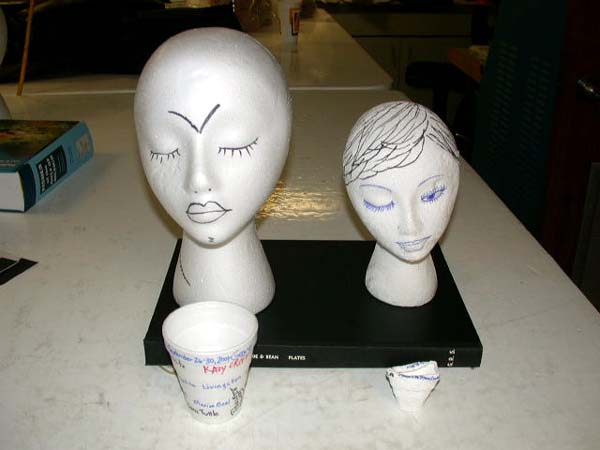
Scientists think it is funny to take styrofoam deep into the ocean because the pressure underwater will squeeze the air out of the styrofoam and "shrink it." Really it is just compressed and more dense. Here is a photo of what happens to styrofoam wig-heads and cups when taken down a few thousand feet, a change of several atmospheres of pressure.

setting up the pressure lab

Students finished class with a lab demonstration of how pressure increases with depth using cups of water with three holes. Water squirted further out of the bottom hole because there was more weight and pressure pushing down on that part of the cup. Students did an excellent job working together and cleaning up. If students did not finish the write up in class, they need to finish it and turn it in.

Safety test - Friday!

Wednesday, August 17, 2011

Week One - Locations, Safety, and Oceanography

So far this week we have been discussing latitude and longitude. Students were given information about the uses of latitude and location and were maybe surprised that many of their phones were equipped with GPS tools. Students practiced on their own, have looked up locations in the US, and participated in an "Around the World" challenge where they needed to follow directions and locate important places.

We watched a BrainPop about Latitude and Longitude featuring Tim and Moby hiking in the mountains. They claimed their position was:

60* 5' 22" N       
159* 13' 10" W

For extra credit (up to five people), tell me where they were hiking.

Today students reviewed safety rules by looking over a cartoon and trying to figure out what the people were doing correctly and incorrectly. They also had to identify the rule numbers (which is a lot more effort). We discussed why safety rules are important and how they are helpful.

Also today students got an introduction to oceanography. We discussed the salinity of the ocean (an average of 35 parts per thousand) and  the pH (the ocean has a pH of 8, which is basic). In second period we finished up with a video about flying penguins. Here's the link if you want to watch it.

Tomorrow is Thursday so there is a quiz. Safety Test is Friday.

Tuesday, August 9, 2011

Welcome to Marine Ecology - Fall 2011

Greetings students, parents, and guardians.

Welcome to a new school year with Ms Jancaitis! This blog has been set up to connect students, parents, and guardians with the chemistry class.

At Open House or in class, each student will receive a course syllabus, safety rules, and a breakage sheet. The safety rules and breakage sheet needs to be read and signed by both the student and parent guardian.


  1. The course syllabus outlines what the course will be like, what topics will be covered, and course expectations. It also contains contact information. There will be a quiz on this syllabus on Thursday.
  2. The safety rules are rules designed to keep the classroom safe and orderly to maximize learning and prevent accidents and injuries. These rules need to be studied because there will be a safety test on Friday and infractions of these rules can lead to disciplinary action as well as low assignment grades.
  3. A breakage sheet is a contract holding students accountable for the items that are broken if the student is acting a manner that is unsafe for themselves or those around them.
Please have these papers signed and returned by Friday. Students not returning signed safety rules and breakage sheets will not be able to participate in labs and activities until the contracts are signed and returned.

Monday, January 3, 2011

On Hiatus

Ms J is not teaching a Marine Ecology section for Spring 2011 :(

Perhaps it will be active in the fall.

Tuesday, November 30, 2010

Sea Turtle Hatchlings

Baby sea turtles, hatchlings, have a very tough life. Mom digs a nest, deposits her eggs (about 100), and then leaves. She may lay eggs four to six times a season. The eggs are about the size of ping pong balls and a little more flexible (they have a ways to fall).

Later, the hatchlings have to fight their way out of the nest and through sand to the surface... and then make their way to the ocean. One of the biggest threats to hatchlings is photopollution. For more information about how lighting affects baby turtles, click here.


For other threats to Sea Turtles as hatchlings or as adults, check here or here. 


Monday, November 29, 2010

Beginning Reptiles

In class we have been working on final projects and today we began discussing reptiles!

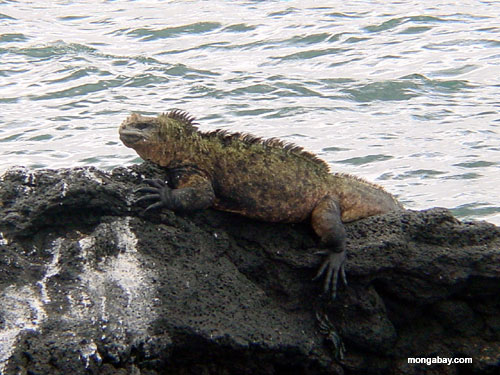
There are four types of reptiles found in saltwater, but they aren't that common. Marine Iguanas are the only marine lizard and are only found on the Galapagos Islands. They dive into the cold seas to feast on algae and as a result have to spend a lot of time basking on rocks to warm back up. They expel salt through their nostrils via salty snot rockets.

Sea Snakes are found in the Indo-Pacific and are venomous, but not aggressive - meaning they can kill you, but aren't likely to attack you. They have really big lungs to hold their breath for a long time and special nose flaps to keep the water out.

Saltwater crocodiles can be found in the Florida Keys, but are more common in Australia. These menacing reptiles are especially scary because they are found on beaches where people want to swim.

.

Wednesday, November 24, 2010

Shark Conservation

Today we discussed conservation of sharks. Millions of sharks are killed each year by humans. Some are caught by sport fisherman, some are harvested for oils, meats, and other things; many of them are being harvested for their fins. Finning wastes 95% of an animal, and the sharks are often tossed back in the ocean alive after being finned to die a slow painful death. For more information, click here.

The fins are harvested for shark fin soup. Shark fin soup is considered a delicacy in some countries and can sell for upwards of a hundred dollars a bowl.

The next thing we talked about was shark attacks. Most shark attacks are actually provoked by humans. Other shark attacks like bump-and-bites and hit-and-runs are the shark investigating a human to see if it is something good to eat. Once the shark tries it, it finds it doesn't like humans, it will swim away. Unfortunately for us humans, we are not so tough and kind of squishy and shark attacks damage us.

Computer Lab Etiquette

You are in the computer lab to do work for this class. If you are not doing work, then we will have problems.

Do not pack up early. Work until the bell or until MsJ says.

SAVE OFTEN. And if you save to a key, also save it to your number. If you lose it, you will have to do it again.

If MsJ asks for your attention, stop what you are doing and listen to what she has to say.

You may watch videos about your organism through reliable websites.

You may listen to music through the computer if you have your own headphones. Rule1 MsJ cannot hear it. You get one warning. Rule2 Turn it on and listen – no million clicks and constant changing. Take both ear phones out when MsJ is talking.